The Real Cost of Starting a Podcast in 2026 (Equipment, Time, and Hidden Expenses)
Podcast startup costs UK 2026
Start smart. Spend wisely.
Starting a podcast in 2026? You've probably already Googled “how much does it cost to start a podcast” and found answers ranging from “basically free” to “thousands of pounds.”
Both are technically true. Neither tells you what you actually need to know.
At Podcast Studio Glasgow, we've watched hundreds of people navigate this decision over the past five years. Some chose the DIY route and succeeded. Many spent thousands on equipment that now sits unused. Others tried to cut corners and ended up spending more fixing problems than they would have spent doing it properly from the start.
Let's break down the real costs, including the ones nobody mentions until you're already committed.

Free ebook for podcasters
Forget viral. Think tribal.
You don't need to go viral. You need to go tribal.
Before you spend money on microphones, cameras, software or studio time, get clear on who your podcast is actually for. A podcast with a defined tribe is easier to plan, easier to sustain and much easier to grow.
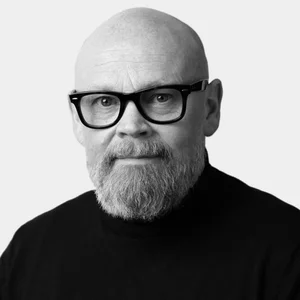
Mark Hunter has been podcasting since 2005 — long enough to know that chasing a huge audience too early is one of the fastest ways to burn money, energy and momentum.
The three paths
The three paths to podcast production
There are essentially three ways to produce a podcast in 2026. Each has genuine advantages and very real costs that go beyond the price tags.
The DIY home studio
This is the route most beginners consider first. Buy equipment, set up at home, figure it out as you go.
£4,400–£7,600Estimated first year total cost.
Hiring a freelancer
Can't face the DIY approach? Hiring a freelance podcast producer seems like the middle ground.
£1,800–£4,800Estimated annual cost for a monthly podcast.
Professional studio recording
This is where most people assume costs spiral. But when you actually calculate the full picture, studio recording often becomes the most efficient option.
£1,800–£2,400Estimated annual cost for a monthly podcast.
Path 1
The DIY home studio
This is the route most beginners consider first. Buy equipment, set up at home, figure it out as you go.
Upfront equipment costs
- Decent microphone, not USB: £150–£300
- Audio interface: £100–£200
- Headphones: £60–£150
- Boom arm or stand: £30–£80
- Pop filter: £10–£25
- Acoustic treatment: £100–£300
- Recording software: £0–£200
- Camera for video, if needed: £400–£1,200
- Lighting kit: £150–£400
- Editing software: £0–£30/month
Total upfront: £900–£2,600
Time investment
- Learning audio engineering basics: 15–20 hours
- Understanding editing software: 10–15 hours
- Troubleshooting technical problems: 10+ hours
- Setting up and testing equipment: 5–8 hours
- Learning video production, if applicable: 20+ hours
Total learning time: 50+ hours minimum
If your time is worth £30/hour, a modest estimate for most professionals, that's £1,500 in opportunity cost before you've recorded a single episode.
At a £30/hour opportunity cost, each episode costs you £150–£210 in time, plus equipment depreciation, electricity and software subscriptions.
First year total cost: £4,400–£7,600.
That's assuming everything goes smoothly. No equipment failures. No major technical issues. No re-records because you didn't notice the audio problem until post-production.
Path 2
Hiring a freelancer
Can't face the DIY approach? Hiring a freelance podcast producer seems like the middle ground.
Per episode costs
- Audio-only editing: £80–£150
- Video podcast editing: £150–£300
- Recording assistance: £40–£100
- Show notes and transcription: £30–£80
Total per episode: £150–£400.
The hidden work
The challenge? Quality varies wildly between freelancers. You might find someone brilliant at £150/episode. Or you might spend £300/episode on work that needs redoing.
There's also the coordination time — briefing freelancers, reviewing work, requesting revisions and managing files.
Add 1–2 hours of your time per episode for project management.
Annual cost for a monthly podcast: £1,800–£4,800.
And you still need somewhere to record. Which brings us back to equipment costs or finding a recording space.
Path 3
Professional studio recording
This is where most people assume costs spiral. But let's actually calculate the cost of professional studio recording at Podcast Studio Glasgow.
- Studio recording at £75/hour
- Two-hour recording session: £150
- Includes professional equipment, multi-camera video, audio engineering and a professional environment
- Minimal post-production needed: 1–2 hours max
Per episode cost: £150–£200 all-in.
Annual cost for a monthly podcast: £1,800–£2,400.
No equipment purchases. No learning curve. No technical troubleshooting. No risk of poor quality. Just professional content, efficiently produced.
Cost comparison
The real year-one cost comparison
The hidden costs
The costs nobody tells you about
Beyond the obvious expenses, there are hidden costs that only reveal themselves after you've committed to a particular approach.
Upgrade cycles
That £200 microphone you bought? In 18 months, you'll want to upgrade because you've learned what good audio actually sounds like.
Quality issues
Poor audio quality kills podcasts. If you're podcasting for business purposes, what's the cost of losing potential clients because your audio sounds amateurish?
Re-recording
Technical problems, unusable audio and background noise you didn't notice during recording can force re-records and damage credibility with guests.
Content multiplication
DIY setups typically produce one output: the podcast episode. Professional multi-camera recording can create social clips, YouTube content, website embeds and promotional assets from the same session.
Mental overhead
Being your own audio engineer, video producer and editor means carrying technical responsibility alongside content creation. That cognitive load has a cost.
What matters
What actually matters for podcast success in 2026
Equipment doesn't make podcasts successful. Content does.
But here's the catch: poor technical quality prevents good content from finding its audience. In 2026, you're competing with thousands of professionally produced podcasts. The algorithmic sorting on YouTube, Spotify and Apple Podcasts favours content that keeps people listening.
Audio quality directly impacts listener retention. Video quality determines social media performance. Production consistency affects audience trust.
The question isn't “what's the cheapest way to start a podcast?” It's “what's the most efficient path to producing content that actually achieves my goals?”
Studio pricing
Want to avoid the equipment rabbit hole?
If you're starting a podcast for your business, brand or organisation, studio recording gives you a simpler route: professional audio, clean video, proper lighting, technical support and no expensive kit sitting unused in a cupboard.
Bookings at Podcast Studio Glasgow start from £75/hour.
Calculating your costs
A realistic 12-month scenario
Let's work through a realistic scenario for each approach over 12 months, producing one episode monthly.
DIY home studio
- Equipment: £2,000
- Learning time: £1,500
- Production time per episode: £180
- Annual production time: £2,160
- Software subscriptions: £240
- Equipment upgrades/replacements: £300
Total year one.
Freelance producer
- Per episode cost: £250
- Your coordination time: £60 per episode
- Annual total: £3,720
- Recording space rental: £600
- Basic equipment for recording: £500
Total year one.
Professional studio
- Recording session per episode: £150
- Minimal post-production: £60
- Annual total: £2,520
- No equipment needed: £0
- No learning curve: £0
Total year one.
Studio recording is literally the most cost-efficient option — and that's before factoring in superior quality and content multiplication.
Batch recording
The batch recording advantage
Here's a cost-optimisation strategy most people miss: batch recording at professional studios.
Book a four-hour session at Podcast Studio Glasgow for £300 with one camera. Record three or four episodes back-to-back. You've just produced a quarter's worth of content in a single morning.
Cost per episode: £75–£100, all-inclusive, with professional quality.
Try matching that efficiency with DIY production.
When each option makes sense
Making your decision
The right choice depends on your specific situation.
Choose DIY if
- You're recording very frequently, three or more times weekly
- You already have audio/video production skills
- You genuinely enjoy the technical process
- You're truly experimenting before committing
Choose freelancers if
- You have good recording space already
- You need specific post-production skills
- You're between DIY and professional in capability
Choose professional studio if
- You're podcasting for business purposes
- Time efficiency matters
- Quality and consistency are non-negotiable
- You want content that multiplies across platforms
- You value predictable costs over DIY unpredictability
For most Glasgow businesses and professional podcasters in 2026, studio recording delivers the best return on investment.
The real investment
What quality actually costs
The podcasting landscape in 2026 is saturated. Apple Podcasts hosts over 4 million shows. Spotify has similar numbers. YouTube is increasingly the primary podcast platform for many audiences.
In this environment, production quality isn't a luxury. It's the baseline that determines whether your content gets algorithmic distribution or gets buried.
Poor audio quality costs you listeners. Amateurish video costs you social media reach. Inconsistent production costs you audience trust.
Professional studio recording isn't an expense. It's an investment in content that actually achieves your goals — whether that's building an audience, establishing thought leadership, generating leads or growing your brand.
Ready to start?
Start your podcast the efficient way
Visit Podcast Studio Glasgow at 279 Abercromby Street, or let's discuss which production approach actually makes sense for your specific situation.
Transparent pricing, honest advice and no pressure — just professionals helping you make smart decisions about your content investment.